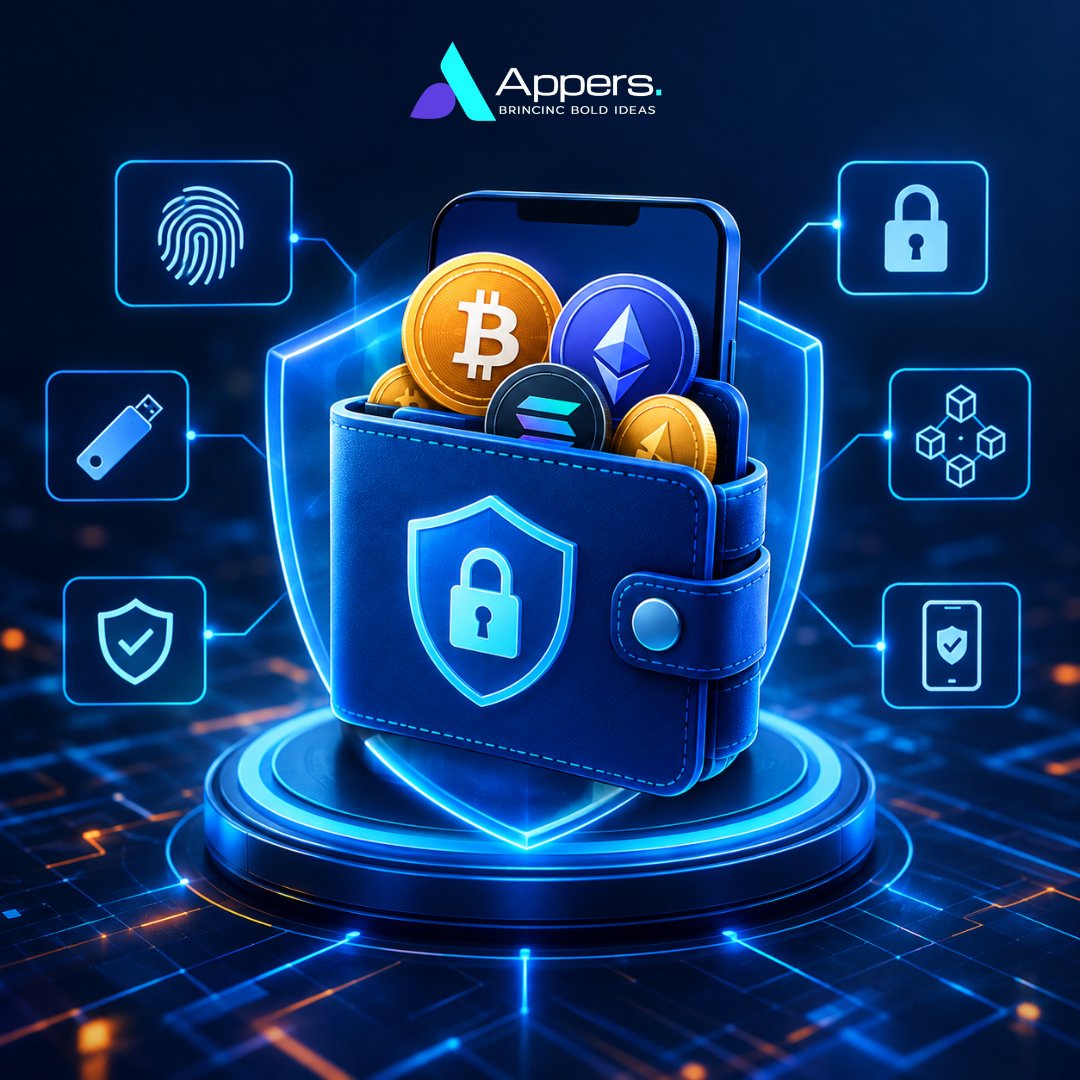
As cryptocurrencies, decentralized finance (DeFi), and Web3 applications continue to evolve, protecting digital assets is becoming increasingly important for individuals and businesses. Crypto wallets play a crucial role in this ecosystem by allowing users to store, send, receive, and manage digital assets. However, growing cybersecurity threats, phishing attacks, private key theft, and malicious smart contracts make wallet security a significant concern.
In 2027, crypto wallet development is expected to place greater emphasis on advanced encryption, multi-factor authentication, biometric verification, smart contract security, and real-time threat detection. Businesses investing in secure wallet solutions need to understand how these technologies work together to protect users and their digital assets.
A specialized crypto wallet development company like Appers can help businesses explore wallet architectures and security features suited to their operational requirements. Understanding these technologies is the first step toward building a more secure digital asset management experience.
Also Read: How Can Crypto Exchanges Adapt To The Growing Demand For Multi-Chain Trading?
1. Advanced Encryption for Protecting Digital Assets
Encryption is one of the fundamental components of secure crypto wallet development. It protects sensitive information, including private keys and wallet-related data, from unauthorized access. Without appropriate security controls, attackers may exploit vulnerable storage systems or compromised devices to access digital assets.
Modern wallet solutions can use established cryptographic algorithms to protect sensitive information at rest and during transmission. Secure key management systems also help reduce the risk of exposing private keys to unauthorized applications or external services.
Developers must select appropriate encryption methods, implement secure key generation, and follow established security standards. Regular security reviews are equally important because encryption alone cannot prevent every type of attack.
In 2027, businesses should prioritize wallet architectures that combine encryption with secure storage, access controls, and continuous vulnerability assessments.
2. Multi-Factor Authentication and Biometric Verification
Passwords alone may not provide sufficient protection against modern cyber threats. Attackers can obtain passwords through phishing campaigns, credential theft, or data breaches. Multi-factor authentication (MFA) adds another layer of protection by requiring additional verification before granting access to sensitive wallet functions.
Depending on the wallet design, users may verify their identity through an authenticator application, a hardware security key, or another supported authentication method. Biometric verification, such as fingerprint or facial recognition, can also make accessing a wallet more convenient on compatible devices.
However, biometric authentication should be implemented carefully. It should complement secure key management rather than serve as a replacement for private keys or cryptographic authorization.
A well-designed wallet can also require additional verification for high-value transfers, changes to security settings, and the addition of trusted withdrawal addresses.
3. Secure Private Key Management
Private keys authorize transactions and provide control over blockchain assets. If an attacker gains access to a private key or its recovery material, the wallet owner may lose control of the associated funds. Therefore, private key protection should be a central priority throughout crypto wallet development.
Different wallet architectures offer different approaches to key management. Non-custodial wallets allow users to control their keys, while custodial wallets place key management responsibilities with a service provider. Both approaches require appropriate safeguards and clearly defined recovery procedures.
Developers can consider hardware security modules (HSMs), secure enclaves, encrypted key storage, and multi-party computation (MPC), depending on the intended use case. MPC can distribute signing responsibilities across multiple participants or components, reducing reliance on a single complete private key.
For businesses managing substantial digital asset holdings, carefully designed key access policies, operational controls, and recovery plans are essential.
4. Multi-Signature Wallets for Additional Protection
Multi-signature wallets require multiple authorized signatures before certain transactions can be completed. For example, a business wallet might require approval from two out of three authorized signers before transferring funds.
This arrangement reduces dependence on a single individual, device, or compromised credential. It can be particularly useful for crypto exchanges, decentralized organizations, treasury management, and companies handling shared digital assets.
Multi-signature functionality also supports internal governance by establishing clear approval procedures for outgoing transactions.
However, the implementation must account for signer availability, recovery procedures, access permissions, and the blockchain’s technical capabilities. Businesses should choose an approval structure that balances security with operational efficiency.
5. Smart Contract Audits and Vulnerability Testing
Crypto wallets that interact with decentralized applications and blockchain protocols may depend on smart contracts. Vulnerabilities in these contracts, transaction authorization logic, or wallet integrations can expose users to financial losses.
Comprehensive security testing can help identify coding errors, access-control weaknesses, and unsafe transaction handling before deployment. Developers may combine automated vulnerability scanning, manual code reviews, penetration testing, and independent smart contract audits.
Wallet interfaces should also clearly communicate transaction details, including recipient addresses, token amounts, network fees, and requested permissions. This helps users recognize suspicious transactions before approving them.
Security testing should continue after launch. Regular updates, dependency reviews, bug reporting programs, and incident response procedures help address newly discovered vulnerabilities.
6. AI-Powered Threat Detection and Transaction Monitoring
Artificial intelligence can support wallet security by identifying unusual activity and potentially suspicious transaction patterns. Monitoring systems may evaluate factors such as abnormal transaction frequency, unfamiliar destinations, unusual account behavior, and known malicious addresses.
For example, a wallet application could flag a transfer that differs significantly from a user’s typical activity or warn about a destination associated with recognized threats. Such alerts can give users an opportunity to review a transaction before proceeding.
Nevertheless, AI-based detection is not a guarantee against fraud. Models can produce false positives, miss unfamiliar attack patterns, or rely on incomplete data. They should therefore complement established security controls and human oversight.
In 2027, businesses should evaluate AI security tools based on their accuracy, transparency, privacy implications, and ability to respond to emerging threats.
7. Why Businesses Should Choose the Right Crypto Wallet Development Company
Selecting a capable development partner can influence the security, scalability, and long-term maintainability of a crypto wallet. Businesses should evaluate a provider’s experience with blockchain networks, key management, authentication systems, smart contract integrations, and security testing.
Appers, a Crypto Wallet Development Company, can be considered by businesses exploring customized wallet solutions for their digital asset requirements. When assessing Appers or any development provider, organizations should review technical capabilities, security practices, relevant project experience, testing procedures, and post-launch support options.
A reliable development process should include requirements analysis, secure architecture design, code reviews, comprehensive testing, deployment planning, and ongoing maintenance. Security responsibilities should also be clearly documented before a wallet is released to users.
8. The Future of Crypto Wallet Security in 2027
Crypto wallet security will increasingly depend on combining multiple protective technologies rather than relying on a single feature. Strong encryption, secure key management, multi-signature approvals, transaction simulation, phishing protection, and continuous monitoring can work together to reduce different categories of risk.
Businesses should also consider blockchain compatibility, user experience, recovery mechanisms, privacy requirements, and applicable regulations when planning a wallet project. Security controls must evolve as blockchain networks, attack techniques, and user expectations change.
Conclusion
Crypto wallet development can improve digital asset security in 2027 by integrating robust encryption, multi-factor authentication, secure private key management, multi-signature authorization, smart contract testing, and intelligent threat monitoring. These measures help reduce security risks while giving users greater confidence in managing their digital assets.
For businesses planning a wallet solution, working with an experienced development partner is an important consideration. Appers can be evaluated as a crypto wallet development company based on its technical expertise, security processes, and ability to support project-specific requirements. Ultimately, effective wallet security requires careful architecture, thorough testing, responsible key management, and continuous improvement after launch.
Also Read: How Can AI-Powered Crypto Marketing Help Blockchain Projects Attract More Investors In 2027?